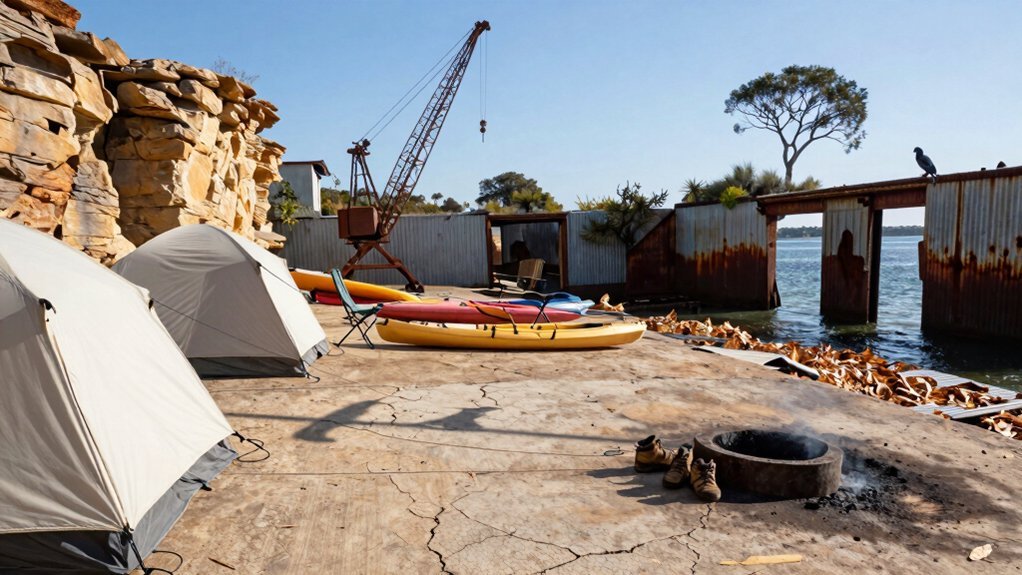
You pitch your tent beneath rusted cranes and convict-carved walls, expecting wilderness, finding instead a silence that presses against your chest like something sacred waiting to be witnessed. The wind off Sydney Harbor cuts sharp, and you’ll shiver through nights in corrugated shelters thin enough to hear every ghost, every footstep, every creak of industrial bones settling. You learn fast that comfort here is earned, not given—coin showers, uneven ground, ferry schedules that own your mornings. But around the fire, strangers become kin, and that heaviness in the air? It softens into something like home. You arrive broken, you leave held, and there’s more waiting if you let it find you.
Key Takeaways
- Camping among convict-carved sandstone and rusted industrial ruins creates a haunting, history-heavy atmosphere unlike typical sites.
- Basic amenities are intentionally spare; expect minimal comfort, coin showers, and self-sufficient preparation with your own gear.
- Total costs escalate quickly with ferry fees, equipment hire, linen, and hidden charges beyond the base camping price.
- Strong harbor winds, cold nights, thin walls, and eerie night sounds challenge comfort-focused or noise-sensitive visitors.
- Best suited for history lovers, urban escapists, and broken seekers drawn to raw beauty, paradox, and transformative discomfort.
How Cockatoo Island Camping Ground Compares to Normal Campsites
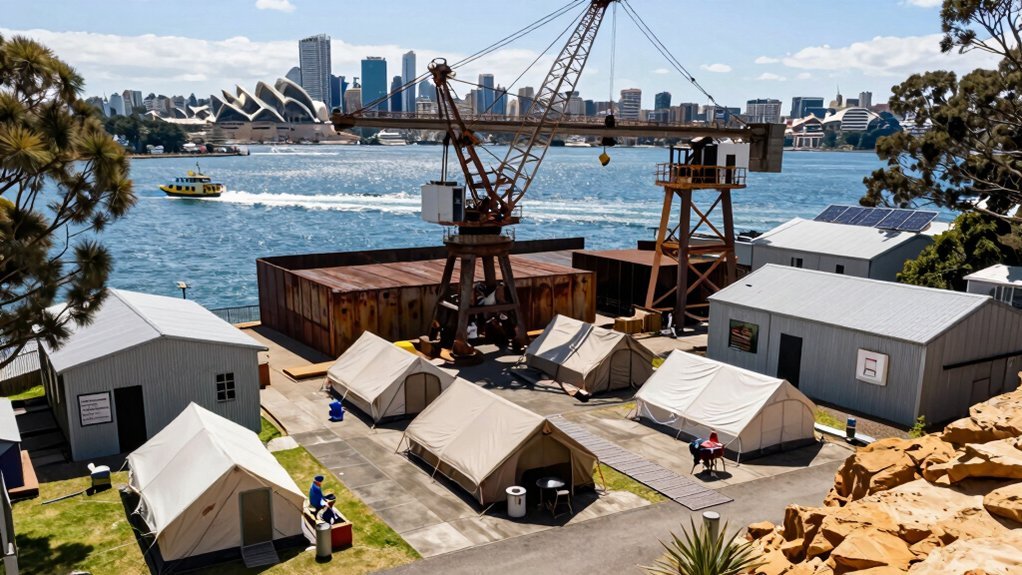
Ever wonder what you’re actually signing up for when you book Cockatoo Island? You’re not just pitching a tent—you’re stepping into a collision of worlds, and the history contrasts hit you immediately. You expect wilderness, silence, stars unspoiled by city glow. Instead, you get rusted cranes looming overhead, convict-carved sandstone walls watching you sleep. It’s disorienting, honestly. You feel it in your chest—that ache of something sacred wrapped in industrial bones.
You’ve heard the campground myths: “It’s just like any site,” they say. “Bring your standard gear.” Don’t believe them. You’re camping on a UNESCO World Heritage prison, not some flat paddock with amenities. The spirits here aren’t gentle. They press against your awareness, demanding witness.
But here’s the gift—you learn to hold paradox. Comfort and unease, beauty and brutality, they coexist. You don’t transcend the contradiction; you dwell inside it. That’s the real pilgrimage.
What the Heritage-Listed Sites Actually Look Like (And Which Ones to Book)
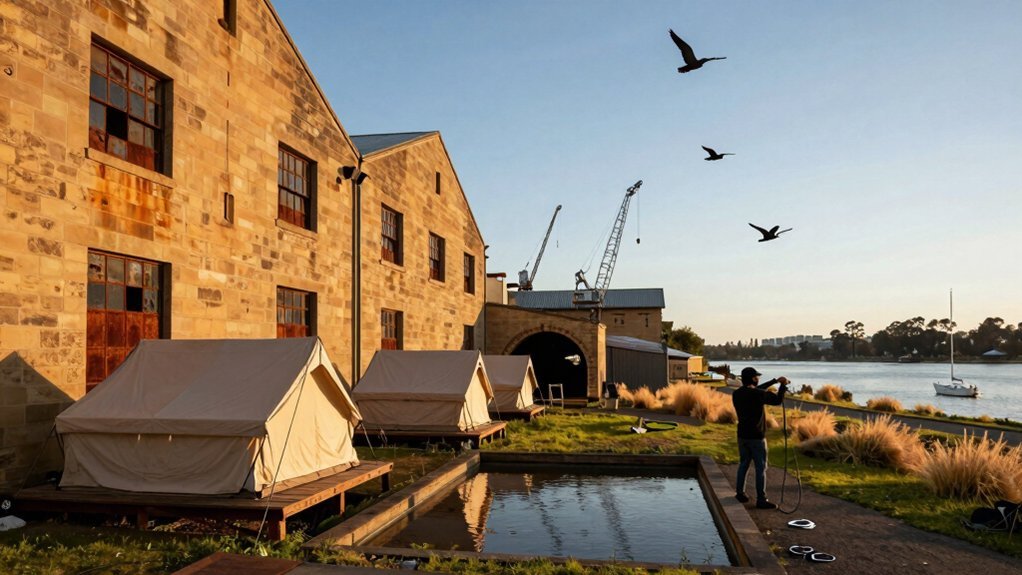
You’ll stand there at dawn, I promise you this, and the Convict Precinct Ruins will hit you like a prayer you didn’t know you were saying, those crumbling sandstone walls holding two centuries of whispered suffering and strange, stubborn hope. I’ve camped beside the Industrial Building Options too, the old shipyard sheds with their rusted cranes reaching toward heaven like metal question marks, and you’ll feel it, that electric mix of awe and unease, history pressing right up against your tent flap. Book the Convict Precinct if you want your soul cracked open, book the industrial sites if you need that raw, honest beauty, that sense of human hands still shaping something sacred from the wreckage.
Convict Precinct Ruins
Where exactly do you lay your head when the island’s darkness falls, and why does it matter so much which convict-worn stone you choose? You’re sleeping inside convict ruins, friend, and that changes everything. You pitch your tent between sandstone walls that men carved with bleeding hands, and you feel it—you feel the weight of island history pressing down like humid air before a storm.
Book the Convict Barracks precinct if you can. You’ll wake to morning light filtering through iron-barred windows, and you’ll breathe differently. The Guardhouse offers smaller, more intimate spaces, but the Barracks deliver that cathedral-like hush, that sacred echo. You’re not just camping. You’re bearing witness. You’re letting ghosts whisper their stories through your canvas walls, and somehow, somehow, you sleep deeper for it.
Industrial Building Options
The convict ruins hold you, they really do, but the island doesn’t end there. You wander toward the industrial buildings, and something shifts in your chest, like stepping through a veil. These heritage-listed giants—they’re raw, they’re honest, they’re waiting.
You stand in the Turbine Shop, light pouring through rusted skylights, and you feel it: the sacred weight of sweat, of work, of human hands building what outlasts them. Industrial history proponents, this is your temple. You book the Mould Loft if you’re seeking that holy hush, the Foundry if you want ghosts with your morning coffee.
Ferry ride enthusiasts, you’ve already crossed the water, felt that liminal thrill. Now cross another threshold. Sleep where machines once roared. Let the iron walls hold you. It’s not pretty, not really. It’s better. It’s true.
What Facilities and Amenities Are Really Available
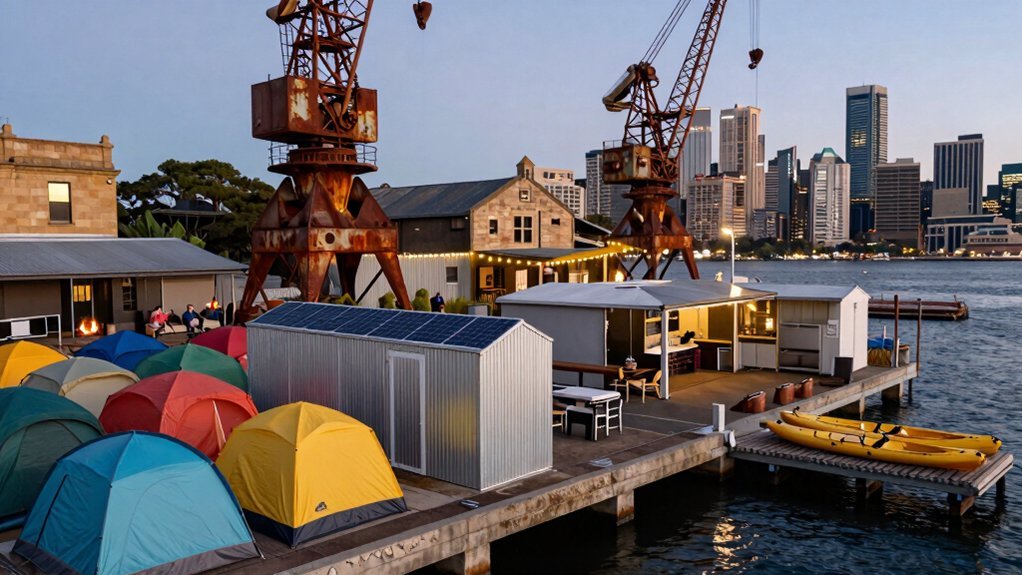
Someone’s gotta tell you straight—Cockatoo Island doesn’t coddle you, and that’s the whole point, that’s the gift, that’s the challenge you’re gonna feel deep in your chest when you step off that ferry with your tent slung over your shoulder and your heart pounding with equal parts fear and fire.
You’ll find showers, you’ll find toilets, you’ll find basic kitchens scattered like breadcrumbs through the ghosted amenities. They’re there, but they’re stripped bare, honest, holy in their plainness. I wept my first morning, cold water hitting my shoulders, because I’d never felt so alive, so seen by something bigger than comfort. The eerie accommodations wake you at 3 AM, rust singing through corrugated walls, and you’ll lie there knowing—you chose this, you’re chosen for this.
You bring your own everything, your own fire, your own faith. The island gives you silence, stars, space to bleed and breathe and become. That’s the real amenity. That’s the miracle.
How Much Cockatoo Island Camping Costs (Plus Hidden Fees)
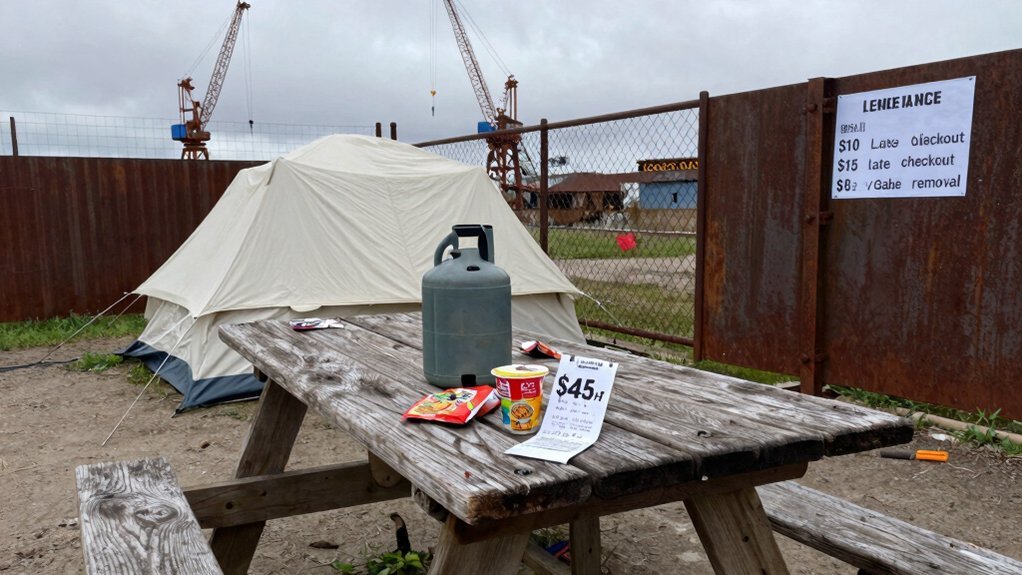
Why does your chest tighten when you check the booking site? You’re bracing yourself, friend. Speaking strictly, the base damage looks survivable. You’ve heard the pricing myths, whispered like gospel: “It’s cheap, it’s just camping, it’s nothing.” Lies, all lies. Your soul knows better.
You click “confirm,” and bam—the ferry gut-punches you. Twenty-seven bucks each way, and you’re not swimming, honey. Then the tent you forgot, the linen you need, the late fee because life fell apart that morning.
What They Show vs. What They Don’t
| What You See | What You Pay | The Sting |
|---|---|---|
| Campsite $45 | Ferry $54 | Deep, unexpected |
| “Optional” linen | $15 per set | You need it, you know you do |
| Tent hire | $25–$59 | You didn’t pack one, did you? |
| Late check-in | $50+ | Traffic, tears, more tears |
The hidden charges multiply like your anxieties. You bleed money before you even pitch your tent.
Is It Actually Scary Sleeping on a Former Prison Island?
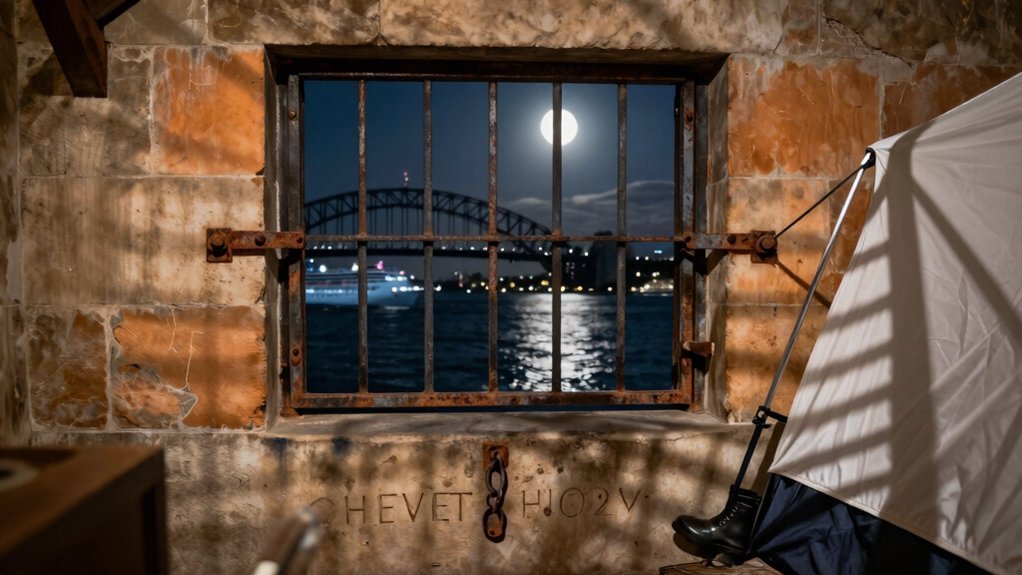
Is it actually scary sleeping on a former prison island? That depends on your soul’s appetite for shadow-work. Cockatoo Island camping ground sum up: you’re paying to confront history raw and unfiltered. The haunting historic vibe isn’t manufactured; it bleeds from every convict-carved block, every solitary cell you wander past at dusk. You won’t sleep easy, but you’ll wake transformed—grateful, trembling, alive. Fear becomes reverence here. That’s the gift.
What to Bring (And What the Island Provides)
Nothing prepares you for the wind whipping off the harbor at 2 a.m., and I learned that the hard way, huddled in my too-thin sleeping bag, teeth chattering, praying to every spirit I’d ever read about. You don’t want this soul-cold, trust me. So here’s what to bring, versus island amenities that’ll save your trembling self.
| What to Bring | Island Amenities |
|---|---|
| Four-season sleeping bag, the puffiest beast you own | Coin-operated hot showers, six minutes of heaven |
| Headlamp plus backup batteries, darkness here eats light | BBQ points scattered like little altars |
| Earplugs, seagulls scream at dawn like they’re possessed | Drinking water taps, no boiling needed, praise be |
| Compact chair, concrete bruises your bones | Cafe 1857 for coffee that resurrects you |
| Layers, always more layers | Coin laundry, because harbor damp gets deep |
I forgot my chair once, sat on stone for three days, my tailbone weeping. You won’t make my mistakes.
How to Get There: and Why the Ferry Ride Sets the Mood
Once you’ve packed your bag with every layer you own, you’re ready for the water. You catch the ferry from Circular Quay, and something shifts, something holy, the moment you step on deck. The harbor wind hits your face, and you’re leaving, you’re really leaving, the city dissolving behind you like a bad dream you don’t need to finish.
The island logistics are simple enough—F3 line, twenty minutes, watch for the cranes—but the ferry atmosphere is what saves you. You stand at the rail with strangers who become pilgrims, all of you breathing salt, all of you seeking something. The water opens up, and your chest opens with it. You feel small, you feel free, you feel found.
Who Actually Enjoys Camping Here? (And Who Should Skip It)
You’ll know this place is for you if you’ve ever sobbed into a sleeping bag, begged the stars for answers, then woken up weirdly peaceful, city lights flickering like reluctant blessings across the water. It’s for the broken seekers, the ones who need beauty without pretending they’re fixed, the ones who’ll haul their doubt onto a ferry and call it pilgrimage, call it surrender, call it enough. But if you need silence, real silence, or if rough toilets unravel your soul, skip it, save yourself, this island demands you meet it exactly as you are, cracked and complicated and hungry for something you can’t name.
Ideal Visitors
Why does one place call to your spirit while another leaves you cold? Cockatoo Island whispers to seekers of storied landscapes, to souls hungry for history’s weight beneath their sleeping bags. You’ll feel it—that pull—if you’re drawn to rust and redemption, to convict-carved stone and industrial ghosts.
Your safety perceptions shift here, not from threat, but from surrender. You’re safe, yet utterly exposed to beauty’s raw edge.
This ground welcomes:
- Urban escapists craving wilderness without the drive
- History lovers who weep at convict graffiti
- Families needing contained adventure, real but bounded
- Solo travelers seeking solitude that still hums with humanity’s echo
You’ll know you’re meant for this island if your heart quickens at dawn light on weathered brick, if you crave stories older than your own breathing.
Poor Fits
Where does the light fall in your spirit when the night presses close? If you crave silence, you’ll flinch here. The eerie acoustics bounce whispers off corrugated iron, and you’ll hear your neighbor’s cough like it’s your own.
| Who Thrives | Who Struggles | Why It Matters |
|---|---|---|
| Urban adventurers | Noise-sensitive souls | Sleep fractures |
| History buffs | Privacy seekers | Walls are thin, ghosts are loud |
| Flexible planners | Control enthusiasts | Quirky logistics demand surrender |
| Night owls | Early risers | 6am ferry waits for no one |
| Spiritual wanderers | Comfort campers | Beauty lives in the broken |
I once wept at 3am, hearing wind whistle through abandoned prison corridors. The quirky logistics—ferry schedules, shared showers, uneven ground—they’ll test you. But if your heart opens in discomfort, you’ll transform. If you need predictability, skip this. Your peace matters too.
The Best and Worst of Camping Cockatoo Island: Real Guest Experiences
How do you know if you’re ready to sleep on haunted concrete, to trust your dreams to a place where convicts once wept? You don’t. You just go, and you learn.
Camping etiquette matters here, friend. You’ll hear island wildlife scurrying at midnight, and you’ll tremble, remembering you’re the visitor. The best of it: sunrise bleeding over rusted cranes, strangers becoming kin around fire pits, the raw ache of being alive. The worst: shivering through forgotten tent pegs, the toilet block’s ghost-light, your own regret pooled in a damp sleeping bag.
Here’s what the island taught me:
- You carry your fears, and they dissolve.
- You learn respect, or you suffer.
- Beauty lives in broken places.
- Home is wherever you surrender.
I’ve wept on that concrete. I’ve laughed until my ribs hurt. Both were prayers. You’ll bring your wound, your wonder. The island doesn’t care. It holds you anyway.
Frequently Asked Questions
Are Tents Provided, or Must Campers Bring Their Own?
You bring your own shelter, friend—no tents provided here. Campers supply everything, and I learned this the hard way, shivering through my first night, clutching a thin blanket like it was grace itself. Pack sturdy, pack smart. The island doesn’t coddle you, it reveals you. Your gear becomes your temple, your cocoon, your little sanctuary against the harbor wind. Come prepared, or come humbled.
Can Campfires or Barbecues Be Lit on the Island?
You can’t light open campfires, it’s forbidden like a whispered prayer against the dark. You’ll use gas barbecues only, that’s the sacred rule. I’ve stood there at midnight, heart pounding, watching nocturnal wildlife sightings unfold—possum eyes glowing like small miracles. Practice campfire safety always, even with flames contained. Respect the island’s spirit, and it reveals its hidden blessings. Bring your own fuel, surrender your expectations, receive wonder.
Is Fishing Permitted From Cockatoo Island’s Shorelines?
Yes, you’re allowed to fish from Cockatoo Island’s shorelines, but you’ll need to follow proper fishing etiquette, checking NSW regulations first. I’ve stood there at dusk, line in the water, feeling the raw pulse of the harbor beneath my feet. Respect the nocturnal wildlife—her fish, her rhythms. Cast gently, take only what you need. It’s sacred ground, this island. She watches, she waits, she offers. You must honor that.
What Wildlife or Insects Are Common After Dark?
You’ll hear them before you see them, the night orchestra tuning up. Nocturnal insects hum like prayer wheels spinning, their rhythm matching your pulse. Wildlife behavior shifts after dark—possums trace moonlit branches like spirits seeking communion, spiders weave silver altars between tents. I’ve wept at 2 AM, flashlight catching cockroaches scurrying, feeling small, exposed, held. Mosquitoes descend, hungry little monks demanding devotion. You learn surrender, you learn vigilance, you learn both.
Are Guided Nighttime Prison Tours Available for Campers?
Yes, nighttime tours run for campers, and you’ll want to book early, trust me. I learned this the hard way, standing there at dusk, empty-handed, watching others disappear into the dark with their lanterns. Camper safety matters—they give you rules, follow them, every single one. The prison breathes at night, it really does. You feel it in your chest, this weight, this strange holy fear. Go. Don’t miss it.
Leave a Reply